
Origin
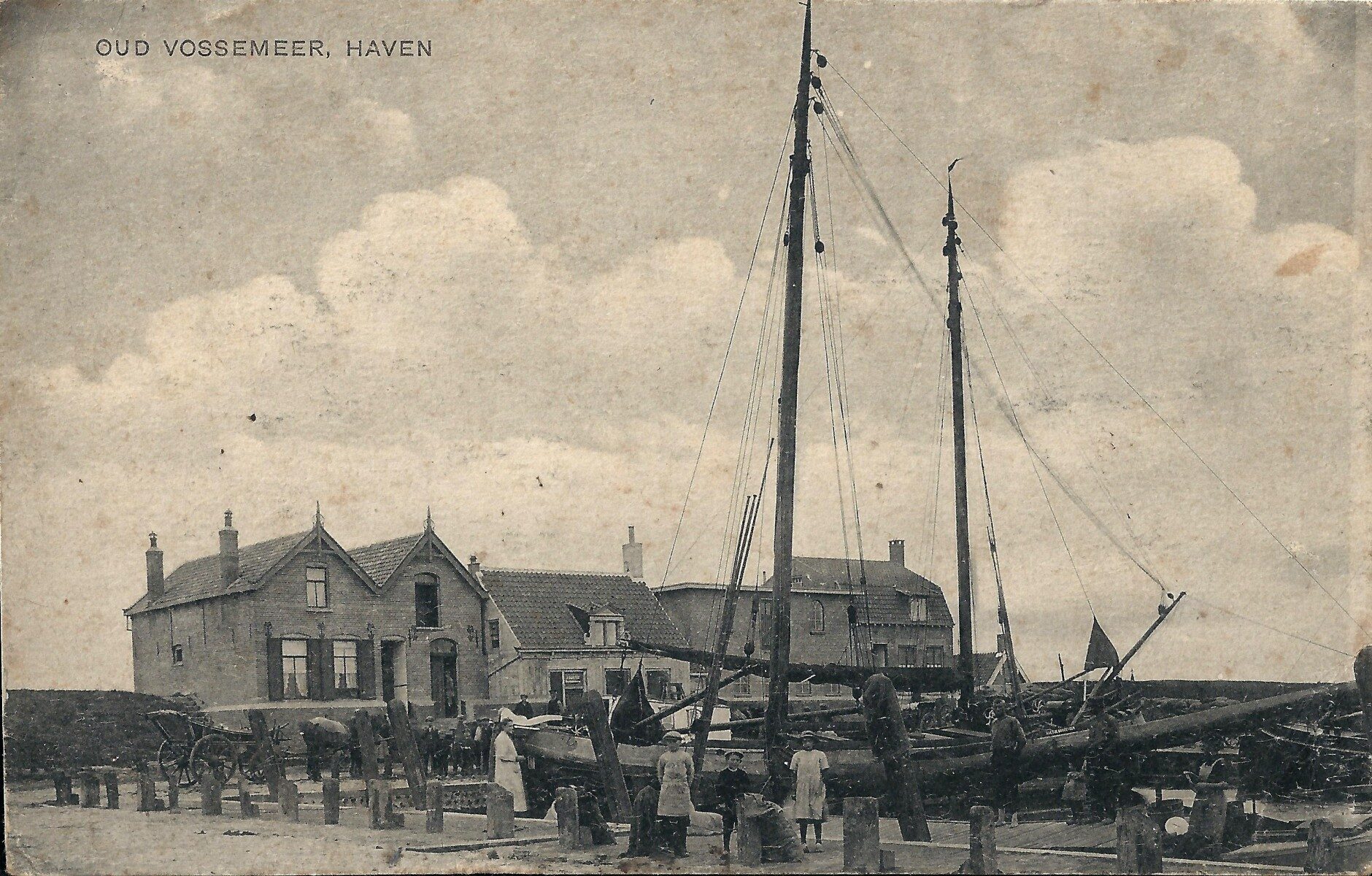
In 1410, the diking off was commissioned of the salt marshes and mud flats where Oud-Vossemeer is now located. In addition, the right to operate a ferry and the right of passage were granted to the lords of the new Vossemeer Manor. The first ferry to Brabant (in the direction of Halsteren) was installed 2.5 km to the south of Botshoofd, in 1494. That was the location of the nearest dike in Brabant (of the Rubeerpolder).
In the year 1567, the lords of the manor commissioned the diking-off of the first polders in the Nieuw-Vossemeer lake (part of Zeeland on the Brabant side). In order to ensure a good connection with this new land, a new ferry was put in place much closer to the village. It was intended as a direct connection between the villages of Oud-Vossemeer and Nieuw-Vossemeer. An attempt by the lords around 1555 to completely dam the Eendracht did not get past Emperor Charles V.
The original ferry at Botshoofd was from then on referred to as the ‘old’ ferry.
Lease

In the French period, the ferries were expropriated by the empire. After the expulsion of the French, ownership of the ferries returned to the manor. In 1817, the new ferry was leased out for 270 guilders. The old ferry only brought in 3 guilders. In 1883, that ferry (at Botshoofd) was leased out for the very last time.
Veerweg (‘Ferry Road’)
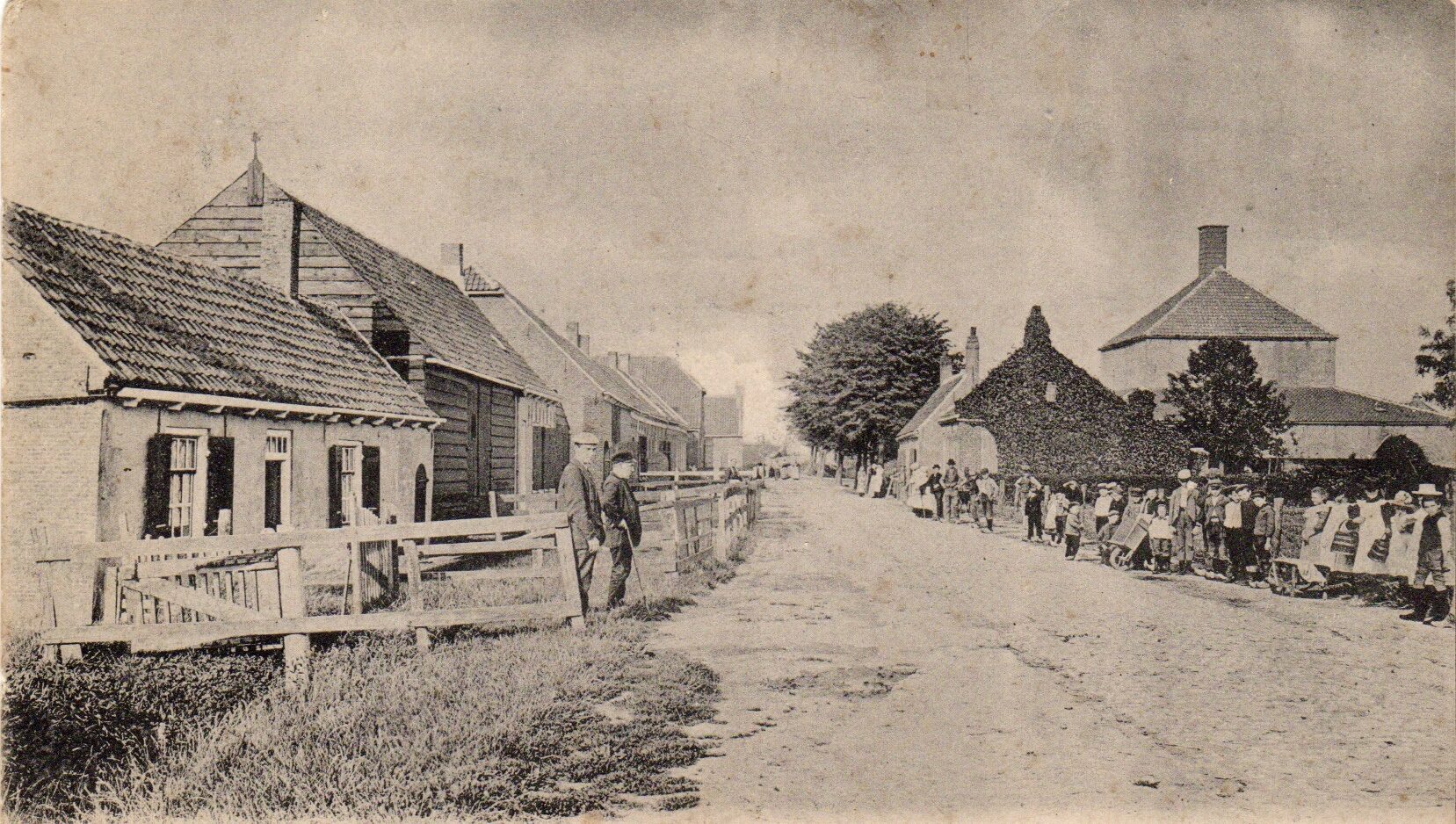
At one point there were two madder stoves, and the weighbridge was also located there. And of course, a local café could also be found here.
Liberation
The End
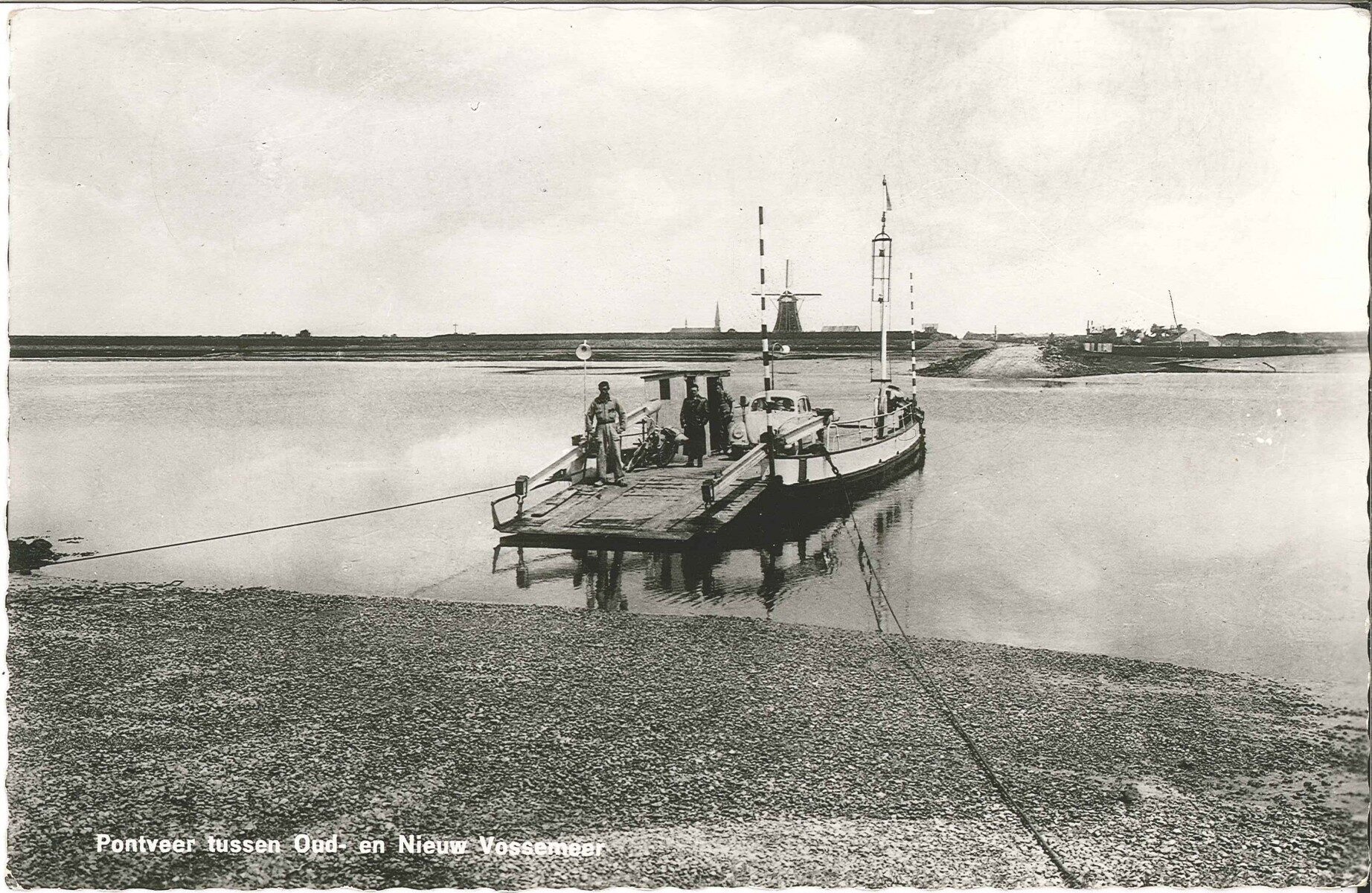
Work started on digging the Scheldt-Rhine canal at the end of the 1960s. That also meant the end of the ferry. At the end of 1972, the ferry failed an inspection, and on February 28, 1973, its shaft was bent. That meant the final end of the ferry between the two Vossemeers. The new bridge was opened for pedestrians on 8 November 1973, and to other traffic from 11 April 1974.
A dike was built in front of the houses (which you are now standing on) to hold back any high water. The concrete structures in front of the houses on the harbour, with space for bracing bars, have therefore become redundant, but they are still clearly recognisable.