Origin

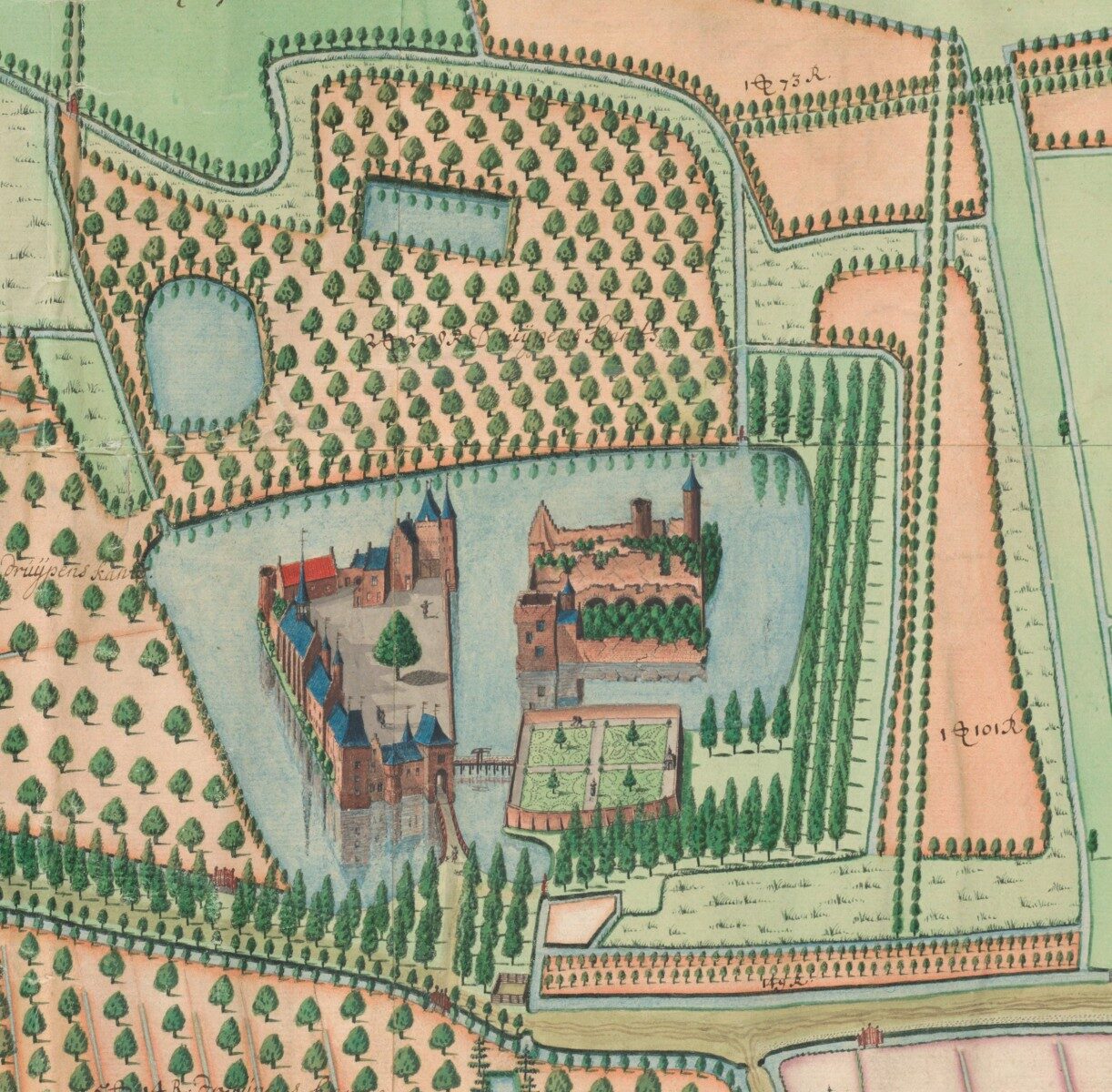
It is thought that the castle was built in the 13th century. At that time, Jan Dankertszoon van Overbordene had possessions in the Oudelandpolder. His son Gheront bought these in 1311 from Count William III of Holland and Zeeland. The oldest name of this area was Overbordene, which means the other side of the Borden. The Borden is the oldest known name of the Pluimpot, a small river that split the island of Tholen in two.

In the Middle Ages, things could also get quite violent in this area. Many noblemen were perpetually at odds each other. The Van Overbordenes and the Van Borsseles and their entourages were forever fighting one another, for example. More than ten years later, the castle is owned by the Van Borsseles.

Jacqueline, Countess of Hainaut

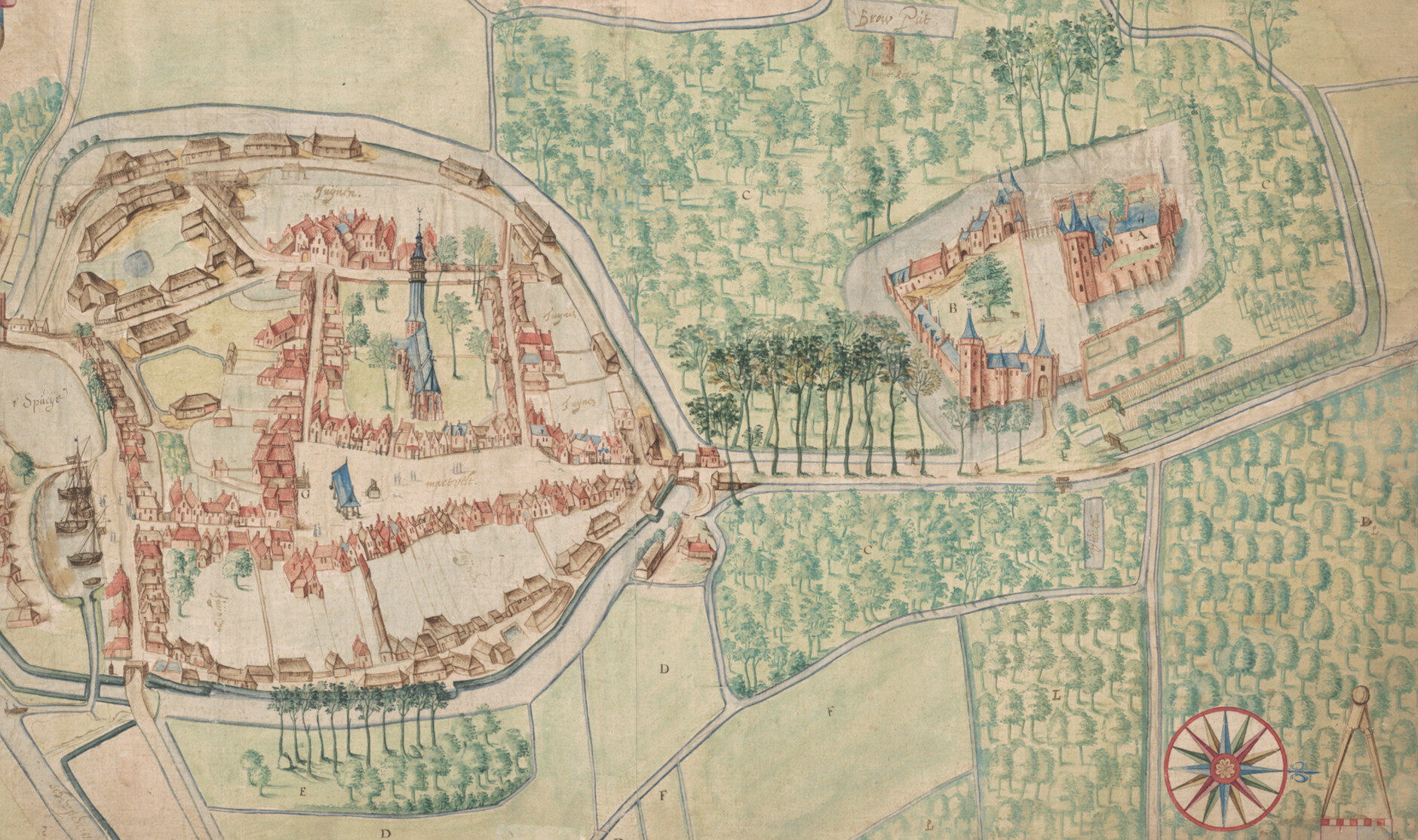
Floris van Borssele had the castle enlarged in the middle of the 14th century, adding the Nederhof, which is also completely surrounded by water. The castle also underwent changes after this. At the end of that century, a heavy square dungeon was built on the foundations of two round towers of the Upper Court.

Sint-Maartensdijk flourished during the life of Frank II van Borssele (c.1396-1470), one of the stadtholders of Holland. He conducted a grand court. His ‘secret’ marriage in 1432 in Sint-Maartensdijk to the Dutch Countess Jacqueline (her fourth marriage) increased his prestige and possessions.

The House of Orange

Frank van Borssele died in 1470 in his castle in Den Briel. Sint-Maartensdijk came into the possession of Floris van Egmond through Frank’s sister Alienora. His ownership was disputed by Jasper van Culemborg, however. The battle that followed was part of the final episode of the Hook and Cod Wars. In Zeeland, this war was referred to as the Squire French war (1488-1492). The town of Sint-Maartensdijk was destroyed at that time. Sint-Maartensdijk and the castle came into the possession of the House of Orange through Anna van Egmond, better known as Anna, Countess of Buren, the first wife of William I of Nassau. King Willem-Alexander is still Lord of Sint-Maartensdijk.

More information about the links between the Royal family and Sint-Maartensdijk can be found in the Orange Room, a small museum at Markt 1.

Derelict
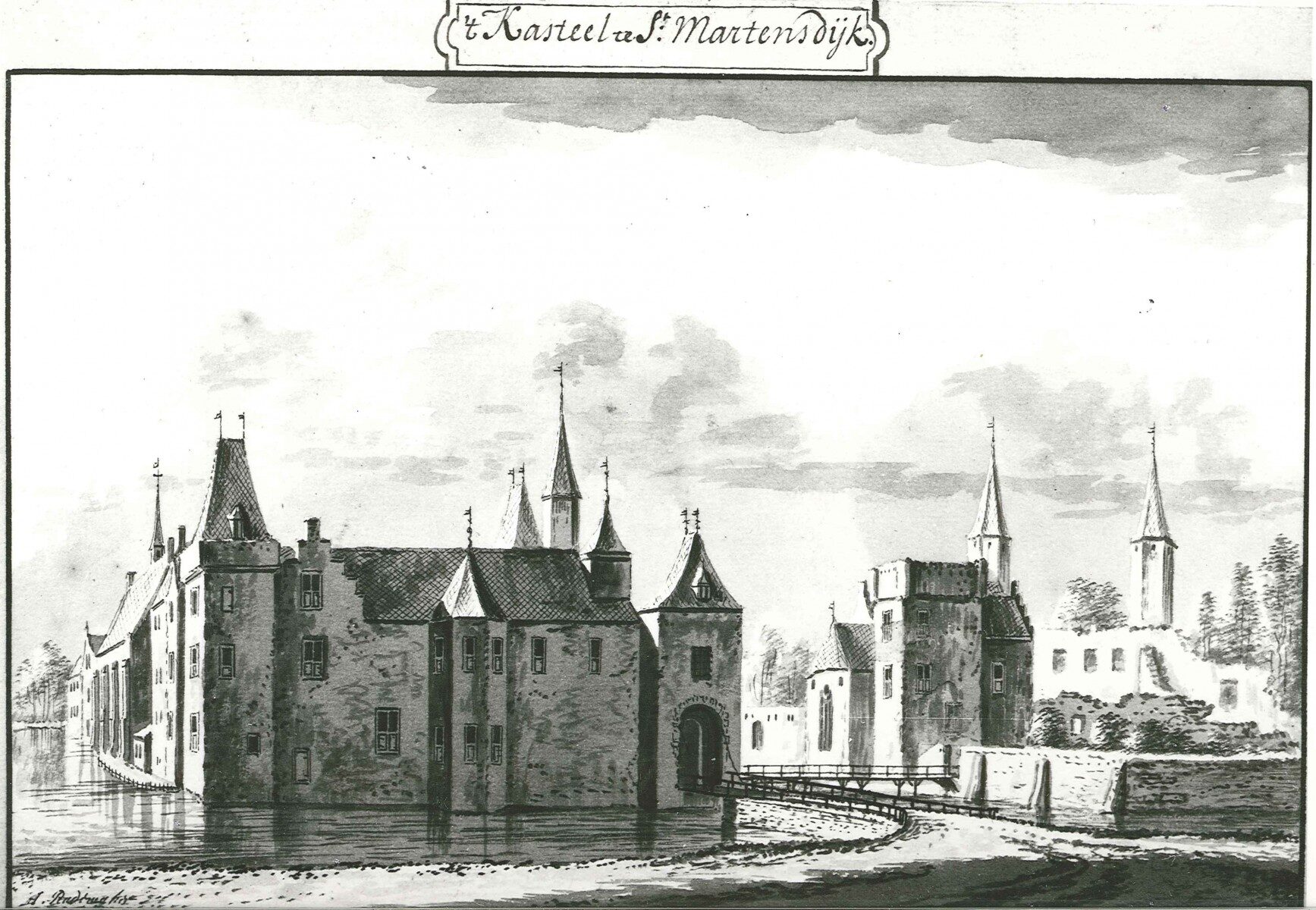
The castle did not play a significant role in the Eighty Years’ War, but it did suffer a lot of damage in the skirmishes. In 1572 and 1573, the Beggars invaded the island of Tholen, plundered the castle and abducted the steward to Den Briel. The town also suffered enormously in the battle. That was when the castle started falling into decay. In the years that followed, the castle was maintained, but it was only after the appointment of Frederik Hendrik, the House of Orange’s master builder, that there was real investment in it again. A chapel was erected on the castle grounds and in the town, the town hall underwent considerable renovation, thanks to a generous donation from the prince. After the death of Frederik Hendrik, the deterioration really set in. Around 1700, the original ‘upper court’ (the main castle) was demolished. Pictures of the castle show that more and more buildings disappeared in the centuries that followed. The castle was inhabited by the steward. The Oranges themselves did not come to Sint-Maartensdijk very often.

Decline

After the invasion of the French in 1795 and the flight of William V to England, what remained of the castle was seized by the Batavian government. In 1807, there was not much left standing, and when the affairs of the domains of the Oranges were finally settled in 1818, it was decided to demolish the castle to six feet below ground level. The completion date set for this was 1 May 1819.

New building

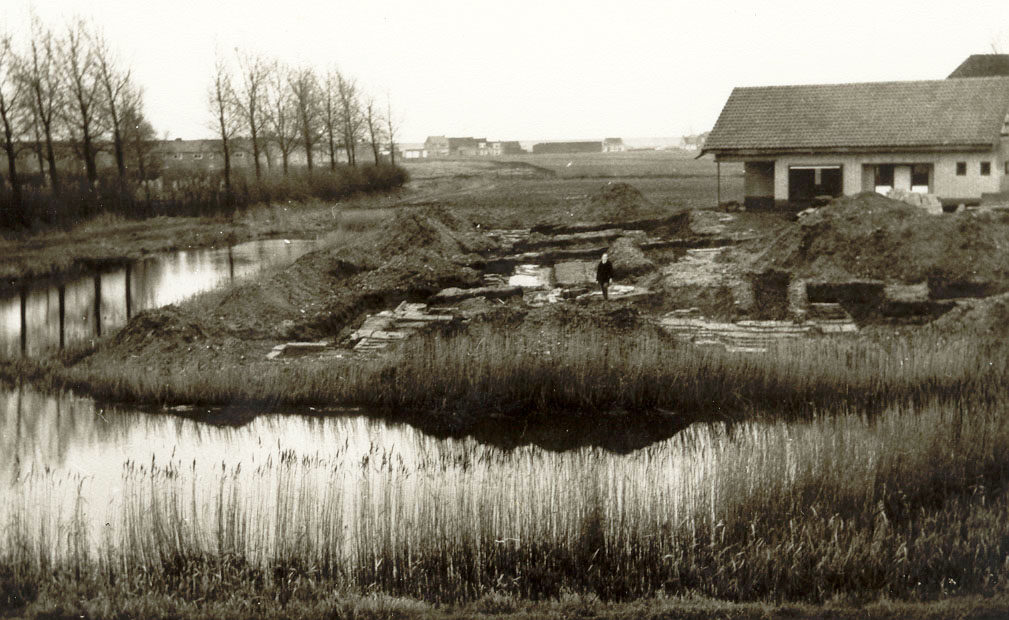
The castle grounds were sold in 1963 to a Mr. Priem, who had the gardener’s house demolished and had a bungalow built. In the years 1965-1967, archaeological research was carried out by the State Archaeological Research Department.