Origin

The village of Haestinge in Sinte Martensdike was mentioned for the first time in a charter of 1357. The village, which at that time already had some economic significance, probably arose in the 13th century near the castle of the lords of Overbordene. After 1434, the town of Sint-Maartensdijk was regularly mentioned. The name is derived from Saint Martin, the patron saint of the local church. It is popularly referred to as ‘Smerdiek’.

In the 14th and 15th centuries the manor belonged to the Van Borsseles, such as Floris and Frank van Borssele. Sint-Maartensdijk came into the hands of the House of Orange through Anna van Buren. King Willem-Alexander is still Lord of Sint-Maartensdijk. The great castle of the House of Orange was located to the north of the town centre until 1819.

City rights
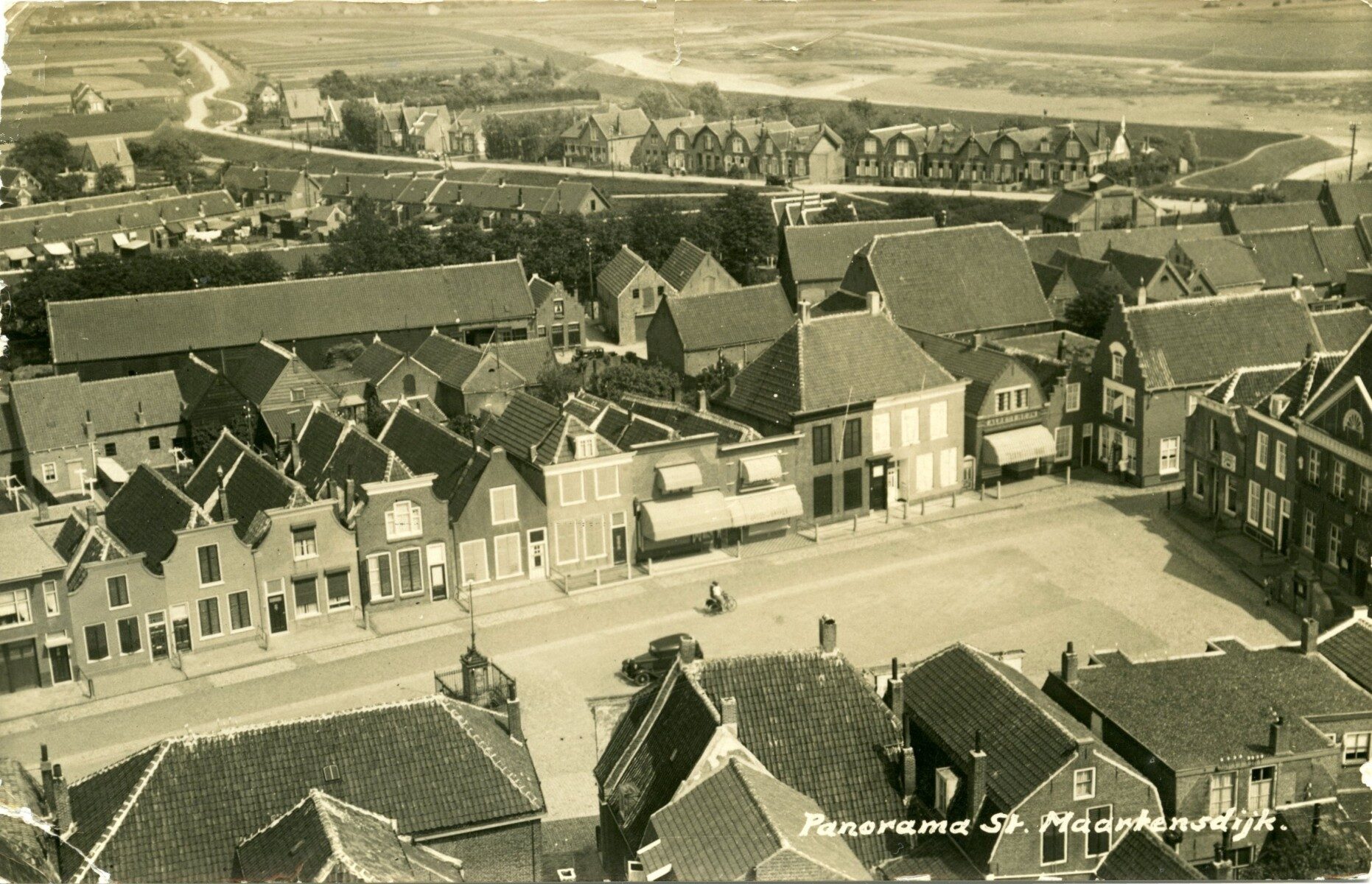
In 1485 the town was granted city rights, but no right to vote in the States of Zeeland. This made Sint-Maartensdijk what is known as a ‘smalstad’ – ‘narrow city’.

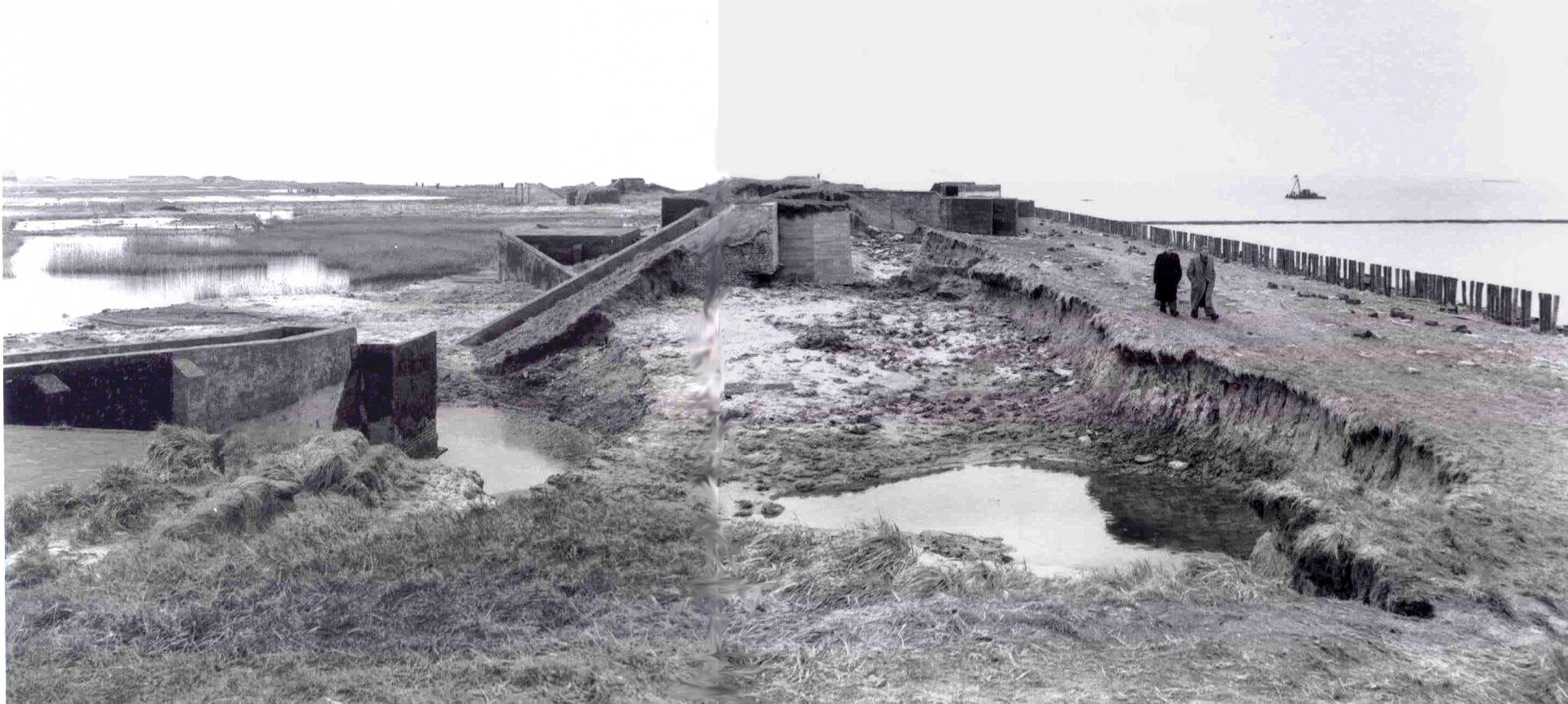
At about the same time as the granting of city rights, the town was reinforced with ramparts and gates. In the first decades of the Eighty Years’ War, the narrow city suffered severely from both the soldiers in Spanish service and the Beggars. It is assumed that the city was completely abandoned in 1588. The last remnants of the fortifications disappeared in 1960 and 1961, when the Oostvest was filled up.

The market
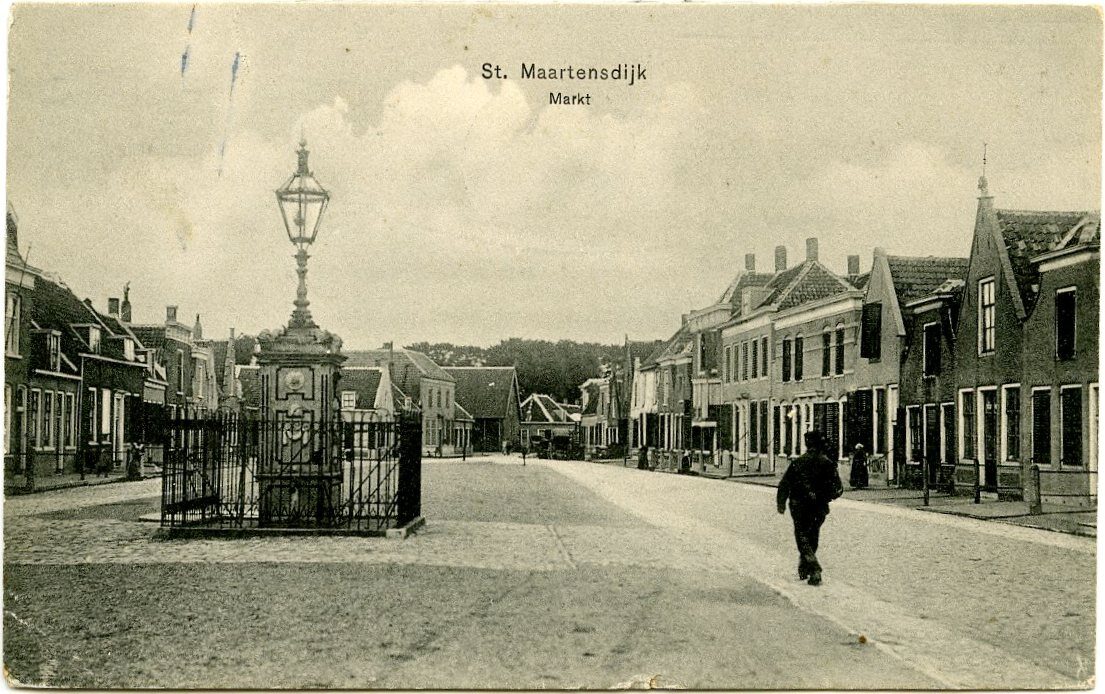
Markets have been held here since at least 1414. In 1615 the town was granted the right to organise 2 cattle markets. The funfair, which was held together with the market in October, was discontinued during the First World War (1914). The horse market disappeared before the Second World War.

Town hall

The oldest preserved town account of 1586/87 mentions the town hall for the first time. The town hall was extensively rebuilt and expanded in the early 17th century. A new façade was also built at that time. The memorial stone in this façade mentions that this took place in 1628 during the administration of Frederik Hendrik, Prince of Orange and Lord of Sint-Maartensdijk. In the second half of the 18th century, the stepped gable was removed, probably because it was in disrepair. The façade was refurbished again in the 19th century. According to the fashion of that time, in 1848 a virtually hollow wooden pediment was placed, a triangular gable. Between 1960 and 1964, the town hall underwent a thorough restoration. From the municipal redivision until 2008, the building was also the official town hall. The building currently houses a hotel and restaurant.

City coat of arms

The municipal coat of arms was confirmed in 1817. The coat of arms is described as a shield of gold with a rampant rabbit of silver standing averdant. Probably a hare is meant, which could be related to the old place name Haestinge.

Doctor’s house

This building at Hazenstraat 2, opposite the church, was at one time the home of mayors and doctors. Dr Tazelaar is still a household name in this city. During his visit to Zeeland in 1852, the Prince of Orange, the eldest son of King William II, stayed here with the mayor De Casembroot. He was the brother of the officer and confidant of the King, and later the governor of the Prince of Orange.

The pump

For centuries the inhabitants drew water from a ‘borrenput’ (wellbore) on the market square. In 1791 the well was filled in, and a city pump was installed. Marinus, the son of the last steward of the House of Orange, Willem de Jonge van Ellemeet, placed the first stone.  The first streetlight was placed on this pump, together with four dolphins. These disappeared during the restoration in the 1950s.