
Harbour

Water and shipping have played an important role in the history of Tholen. The Heenetrecht, the current Eendracht, was part of the waterway between Antwerp and Dordrecht. A ‘Kogge’ (cog-built vessel) is depicted on the seals of Tholen. Tholen had to serve the territorial lord in times of war, with a ‘kogge’ with a 31-man crew. The 16th century was characterised by high storm surges and flooding, and the city also suffered heavily in the war against the Spanish King Philip II. Around 1600 a completely new defence system of ramparts and strongholds was constructed.
Retaining structure
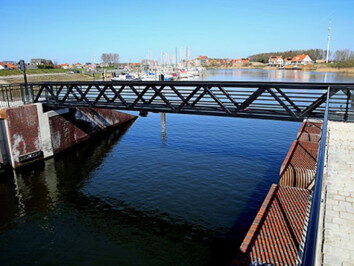
A retaining structure in the port was completed in 2017. This was needed, because the Volkerak-Zoom Lake had been set up as the biggest water storage lake in the Netherlands.
Commercial harbour
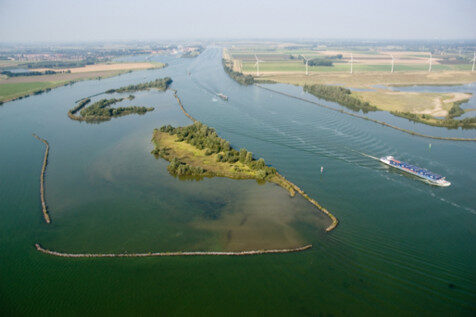
At the end of the 1960s, work commenced on digging the Scheldt-Rhine canal. The old arm of the river near the town was cut off to create a new large port for Tholen, which has since then been used mainly by pleasure boats.
On 22 October 1986, the Oester Dam was closed, creating the Zoom lake. The Bergsediep Sluice in this dam, which is 34 m long and 6.5 m wide, is too small for large fishing vessels. Small vessels can pass through quickly, however, without the salt water causing much damage to the now freshwater Zoom lake. Tholen is accessible to large ships via the Scheldt-Rhine Canal.
Duivendijk Shipyard
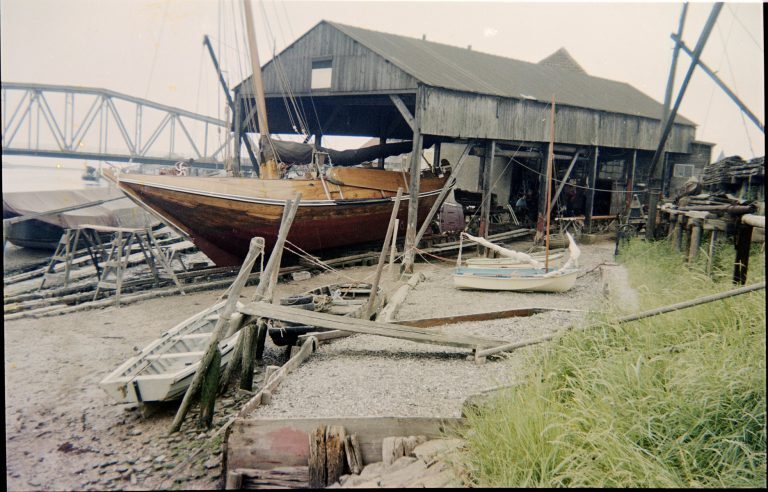
The Duivendijk shipyard has been established in Tholen since 1872. At that time, oyster cultivation was on the rise, and there was an urgent need for a shipyard to provide maintenance for the ships. The family business developed from building fishing vessels to building yachts.
End of the tram
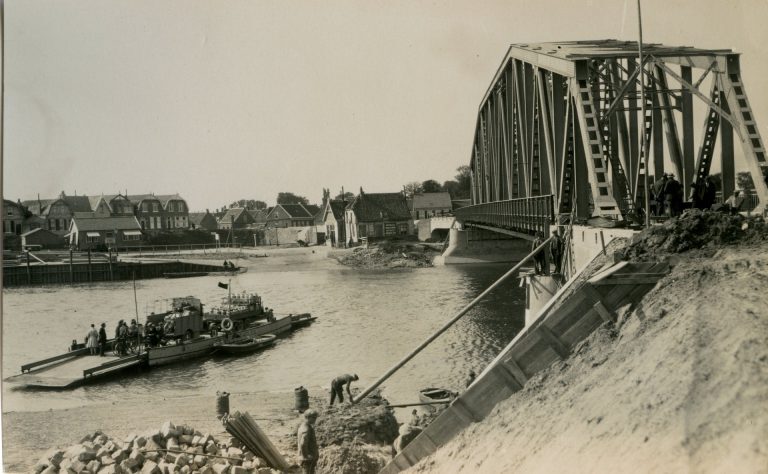
From 1865, regular attempts were made to establish a fixed link with Brabant. These were always fruitless, until a terrible accident with a passenger bus occurred in 1925. When driving off the ferry, the bus slid backwards into the water, and 7 people died. This sad event probably helped to get final approval for construction of the bridge. The bridge was opened, to great celebration, in October 1928. This bridge was a use for almost 50 years, until it became superfluous due to the digging of the Scheldt-Rhine Canal and the construction of a new bridge, that was opened in January 1971.
Oyster pits
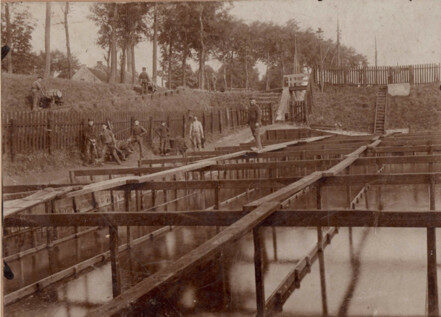
In the second half of the 18th century, oyster cultivation grew rapidly. After the harsh winter of 1963 and the construction of the Delta Works, this cultivation disappeared from the waters near Tholen, because the salt water was replaced with fresh water.